Build a More Professional, Connected, and Secure Workplace
Modern organizations depend on technology for communication, meetings, document management, teamwork, reporting, customer service, and day-to-day administration.
However, using separate email accounts, uncontrolled file-sharing platforms, informal messaging applications, and locally stored documents can make business information difficult to manage.
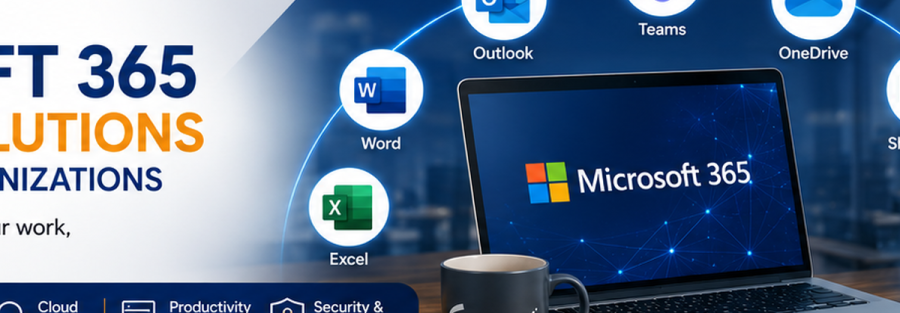
Microsoft 365 brings professional email, productivity applications, online meetings, file storage, collaboration, user administration, and security capabilities into one connected business environment.
Depending on the selected plan, Microsoft 365 business services can include custom business email, Word, Excel, PowerPoint, Outlook, Microsoft Teams, OneDrive, administrative tools, and security features. Microsoft’s business plans are designed for organizations with up to 300 users, although product availability and included features may differ by plan, market, and whether Teams is included.
Junubia Host helps organizations in Tanzania assess their requirements, select appropriate licenses, configure users, prepare professional email, plan migrations, organize collaboration tools, and provide guidance for administrators and employees.
What Is Microsoft 365 for Business?
Microsoft 365 is a subscription-based suite of applications and cloud services designed to support business productivity, communication, collaboration, administration, and security.
It can connect several important workplace functions:
- Professional company email
- Calendars and meeting scheduling
- Microsoft Teams meetings and chat
- Word, Excel, PowerPoint, and Outlook
- OneDrive business-file storage
- SharePoint team sites and organizational resources
- User and license administration
- Identity and access management
- Device and application management in eligible plans
- Security and threat-protection features in eligible plans
Rather than purchasing and managing unrelated tools, organizations can create a more consistent working environment for their employees.
1. Professional Business Email with Outlook and Exchange
An organization’s email system is part of its professional identity.
Instead of employees using unrelated personal addresses, a company can communicate through structured addresses using its existing business domain, such as:
info@yourcompany.co.tzsales@yourcompany.co.tzfinance@yourcompany.co.tzsupport@yourcompany.co.tzfirstname.lastname@yourcompany.co.tz
Microsoft 365 business plans can provide custom business email, while Outlook brings email, calendars, tasks, and contacts together. Exchange supports business-class email and calendar services.
Professional email can help an organization:
- Present a consistent identity
- Improve customer confidence
- Organize departmental communication
- Keep company correspondence under organizational control
- Manage employee accounts centrally
- Schedule meetings and appointments
- Reduce dependence on private email accounts
Junubia Host can help configure Microsoft 365 email using an organization’s existing company domain. Domain registration remains separate from this Junubia Host service.
2. Microsoft Teams for Communication and Collaboration
Email is important, but not every workplace conversation should become a long email chain.
Microsoft Teams gives employees a shared environment for meetings, chat, calls, file sharing, tasks, and collaboration. It integrates with Microsoft 365 services and supports teams working across different locations and time zones.
Organizations can create Teams environments for:
- Management
- Finance
- Human resources
- Sales
- Customer service
- Procurement
- Projects
- Branch offices
- Executive committees
- Temporary working groups
Teams can help employees:
- Conduct online meetings
- Communicate through individual and group chat
- Share files
- Collaborate on tasks
- Organize discussions by department or project
- Work from desktop and mobile devices
- Coordinate with colleagues and approved external participants
The exact meeting, calling, webinar, recording, and collaboration features depend on the selected Microsoft plan and configuration.
3. OneDrive for Individual Business Files
Employees often save important business documents only on their laptops.
This creates operational risks when:
- The device is unavailable
- The employee changes computers
- Colleagues need access to a document
- Several versions of the same file are circulated
- The employee leaves the organization
OneDrive provides cloud-based business-file storage that allows users to save, access, edit, and share files from supported devices. Microsoft 365 Business Basic currently includes 1 TB of cloud storage per licensed user, although entitlements depend on the selected subscription.
Employees can use OneDrive for:
- Individual working documents
- Files under development
- Controlled document sharing
- Collaboration with colleagues
- Access across approved devices
- Reducing repeated email attachments
The organization should still define clear policies governing which files employees may store, share, or access.
4. SharePoint for Departments and Organizational Information
OneDrive is generally suitable for individual business files, while SharePoint can be used for shared departmental or organizational content.
A company may use SharePoint to create:
- Departmental document libraries
- Policy and procedure repositories
- Project workspaces
- Staff information centres
- Internal announcements
- Shared forms and lists
- Management resources
- Controlled team documents
SharePoint can help employees locate information through organized sites and shared resources rather than depending on email attachments or documents stored on individual computers.
Junubia Host can help organizations plan how OneDrive, Teams, and SharePoint should be used for different types of information.
5. Microsoft Word, Excel, PowerPoint, and Outlook
Microsoft 365 business plans provide different combinations of web, mobile, and desktop productivity applications.
Depending on the selected subscription, employees may receive access to:
- Microsoft Word
- Microsoft Excel
- Microsoft PowerPoint
- Microsoft Outlook
- Microsoft OneNote
- Microsoft Publisher or Access where applicable
- Additional Microsoft business applications
Microsoft 365 Business Basic focuses primarily on web and mobile applications, while plans such as Business Standard and Business Premium include desktop, web, and mobile application options. Plan availability and application entitlements should be confirmed at the time of quotation.
The correct plan should be selected according to employee roles.
For example:
- A frontline employee may primarily require email and web-based collaboration.
- An accountant may require desktop Excel.
- A manager may need Outlook, Teams, PowerPoint, and document access across several devices.
- A remote employee may require collaboration and stronger device-management controls.
Not every employee necessarily needs the same license.
6. Centralized User and License Administration
One of the major benefits of a business platform is centralized administration.
The Microsoft 365 admin centre allows authorized administrators to perform common tasks such as:
- Add users
- Assign licenses
- Remove or restore users
- Reset passwords
- Manage groups
- Review services and subscriptions
- Access administrative reports
Microsoft documents the admin centre as the central location for managing users, licenses, groups, billing, services, and other administrative functions.
This can improve employee onboarding and offboarding.
When a new employee joins
The administrator can:
- Create the user account
- Assign the approved license
- Configure the business email address
- Add the employee to relevant teams and groups
- Provide access to approved resources
- Apply the organization’s security requirements
When an employee leaves
The organization can:
- Block access
- Reset credentials
- Remove or reassign licenses
- Preserve required business information
- Review mailbox and document access
- Remove the employee from relevant teams and groups
This provides stronger organizational control than relying on accounts personally owned by employees.
7. Microsoft 365 Business Premium Security
Organizations handling financial data, confidential documents, employee information, customer records, or sensitive communication may require stronger security and device-management capabilities.
Microsoft 365 Business Premium combines productivity services with additional security and management technologies, including Microsoft Intune, Microsoft Defender for Business, and Microsoft Defender for Office 365 capabilities.
Depending on configuration, these capabilities can support:
- Identity and access policies
- Device and application management
- Protection against phishing and malware
- Endpoint threat protection
- Security-policy enforcement
- Protection of sensitive business information
- Management of company-owned and approved personal devices
Microsoft Intune Plan 1, included with Business Premium, can be used to enrol, monitor, and manage company-owned or approved personal devices.
Security requires proper setup. Purchasing a premium license alone does not automatically create a complete organizational security programme.
The organization must also establish:
- User responsibilities
- Access policies
- Device standards
- Administrator roles
- Employee training
- Incident-response procedures
- Regular security reviews
8. Choosing the Right Microsoft 365 Plan
The best plan depends on how employees work.
Organizations should consider:
- Number of users
- Required applications
- Need for desktop applications
- Business email requirements
- Online meeting requirements
- File-storage needs
- Security requirements
- Device-management requirements
- Administrative capacity
- Employee locations
- Available budget
Microsoft 365 Business Basic
Generally suitable for organizations requiring web and mobile productivity applications, custom business email, Microsoft Teams under eligible plan configurations, and cloud file storage.
Microsoft 365 Business Standard
Generally suitable for employees requiring desktop, web, and mobile productivity applications in addition to business email and collaboration services.
Microsoft 365 Business Premium
Generally suitable for organizations requiring productivity applications together with stronger identity, device-management, endpoint-security, and threat-protection capabilities.
Microsoft 365 Apps for Business
May be suitable where desktop productivity applications and cloud storage are required but a complete business email and collaboration environment is not part of the requirement.
Product configurations and commercial terms may change. Junubia Host will confirm the appropriate plan and current quotation after assessing the organization’s users and requirements.
9. Microsoft 365 Migration and Implementation
Moving to Microsoft 365 should be planned carefully.
A migration may involve:
- Existing email accounts
- Previous messages
- User addresses
- Calendars
- Contacts
- Shared mailboxes
- Distribution groups
- Existing files
- Employee devices
- Application installation
- Access permissions
- Employee communication
- Administrator preparation
- User training
Microsoft provides administrative resources for Microsoft 365 setup, application installation, migration, user management, subscription administration, and business security.
A poorly planned migration can interrupt business communication.
A structured implementation should define:
- The users being migrated
- The selected Microsoft 365 plans
- The approved email structure
- Data that must be transferred
- The migration date and method
- Employee communication and training
- Post-migration support
- Security and administration responsibilities
10. How Junubia Host Supports Your Organization
Junubia Host provides structured Microsoft 365 support for organizations in Tanzania.
Consultation and requirement assessment
We review:
- Number of employees
- User roles
- Existing email environment
- Current productivity applications
- Devices
- Collaboration requirements
- Security priorities
- Budget
Plan and license selection
We help determine which Microsoft 365 plans are suitable for different groups of employees.
Commercial quotation
We prepare a quotation according to the approved products, number of users, subscription term, and implementation scope.
Microsoft 365 tenant preparation
We assist with the initial organizational setup and administrative configuration.
Professional email configuration
We configure approved email addresses using the organization’s existing company domain.
User creation and license assignment
We create or coordinate user accounts and assign approved licenses.
Email migration planning
Where required, we assess the current email environment and prepare a migration approach.
Microsoft Teams setup
We help organize teams and channels based on departments, projects, or management structures.
OneDrive and SharePoint planning
We help define where individual and shared business information should be managed.
Application installation
Where included in the selected plan, we assist with Microsoft 365 application installation on approved devices.
Security configuration
For eligible plans, we assist with agreed identity, device, and security configurations.
User orientation
We guide employees on professional email, Teams, file sharing, and collaboration practices.
Ongoing license coordination
We support organizations as they add employees, change user requirements, or review their subscriptions.
Who Can Benefit?
Microsoft 365 business solutions can support:
- SMEs
- Banks and financial institutions
- Government institutions
- NGOs
- Telecom companies
- Schools and universities
- Law firms
- Hospitals and clinics
- Hotels
- Construction companies
- Engineering firms
- Professional service providers
- Media organizations
- Energy companies
- Retail companies
- Growing start-ups
Any organization managing employees, communication, documents, meetings, or customer relationships can benefit from a more structured workplace.
Conclusion
Microsoft 365 is more than a collection of Office applications.
It can provide a connected environment for professional email, meetings, teamwork, document collaboration, user administration, productivity, and business security.
The greatest value comes from selecting suitable licenses, configuring the platform correctly, preparing users, managing access, and aligning the system with the organization’s working practices.
Junubia Host helps Tanzanian organizations plan and implement Microsoft 365 solutions that support real business requirements.